2026-10-17 ·
How Santa Ana Winds Raise Fire Risk in the San Fernando Valley
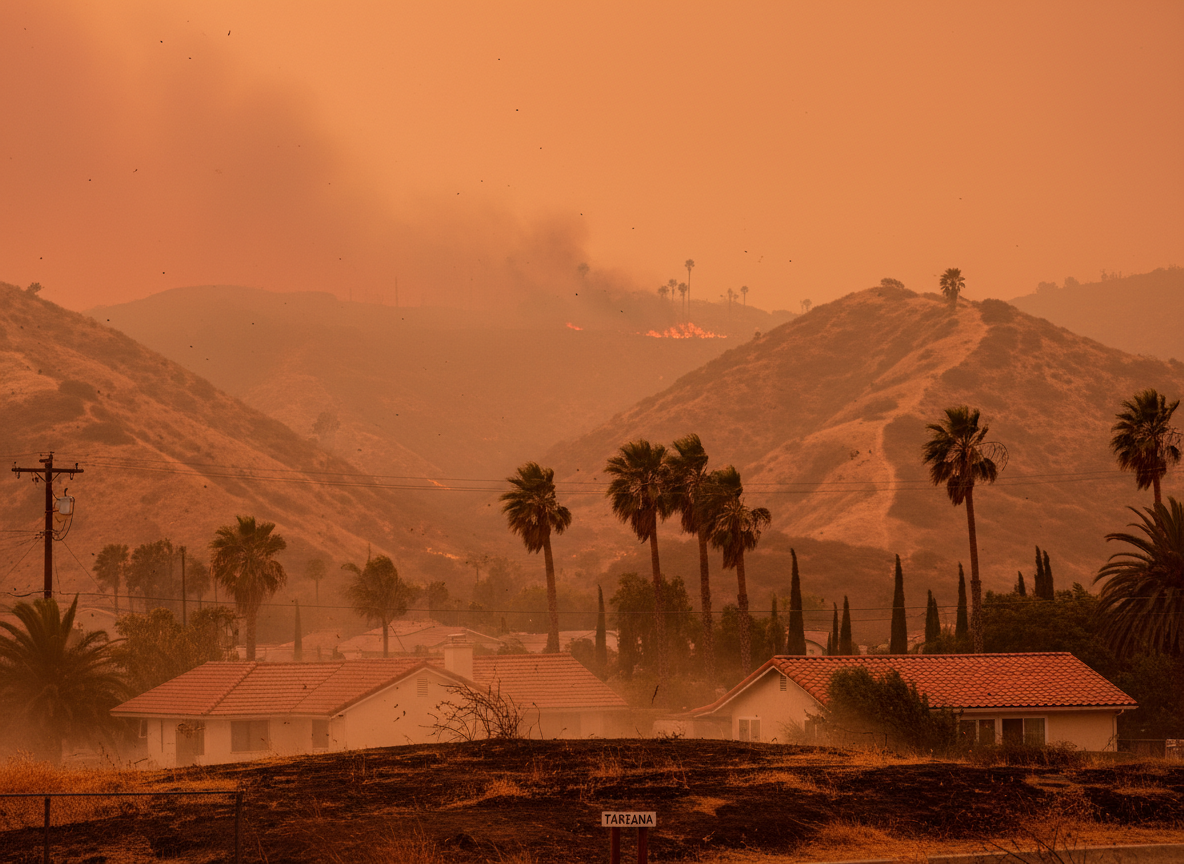
Santa Ana winds raise fire risk in the San Fernando Valley by driving relative humidity below 10 percent while gusting 40 to 70 mph for hours or days at a time. These winds move dry air from the interior deserts across the mountains and into Los Angeles County neighborhoods such as Tarzana, Encino, and Reseda, turning ordinary ignition sources into fast-moving threats.
Mechanics of Santa Ana Winds in the Valley
Santa Ana winds form when high pressure builds over the Great Basin and air flows southwest through mountain passes. In the San Fernando Valley the flow accelerates as it descends, compressing and heating the air while stripping moisture from grasses, shrubs, and trees. Mediterranean climate patterns with warm dry summers already leave vegetation brittle by October, so the first strong Santa Ana event can drop fuel moisture content to critical levels within 24 hours. Tarzana Square and South Tarzana sit on the southern edge of the valley where wind channeling between the Santa Monica Mountains and the valley floor often produces the strongest gusts. Older single-story homes with wood shake roofs or dense landscaping near Tarzana Park experience faster ember ignition compared with newer construction farther north.
Fire Spread Patterns Near Tarzana
Once a fire starts under Santa Ana conditions, flame fronts advance at rates that can exceed one acre per minute on open slopes. Embers travel hundreds of yards ahead of the main front, landing on roofs, gutters, and vents in South Tarzana and near Encino Tarzana Medical Center. The 24/7 availability at 6022 Reseda Blvd allows crews to reach these neighborhoods quickly when winds are forecast. Wind-driven fires also create spot fires across multiple blocks, complicating access for suppression crews and increasing the volume of smoke and soot that penetrates homes through HVAC systems and attic vents. Properties bordering open space or near Reseda and Woodland Hills corridors see the highest ember exposure because prevailing Santa Ana flow aligns with those topographic gaps.
Restoration Challenges After Wind-Driven Fires
Wind-driven fires deposit finer soot particles deeper into building cavities than fires that burn under calmer conditions. Crews must remove and clean insulation, ductwork, and attic spaces more thoroughly because pressure differentials during the event force particulates behind walls. Emergency fire damage restoration protocols include negative-air machines and HEPA filtration to capture these particles before they resettle. Fire damage clean up in Tarzana homes often requires additional time to address wind-blown debris mixed with ash on exterior surfaces and in yards. Navigating insurance claims after fire damage in Los Angeles County becomes more complex when documentation must show wind-related ember patterns versus standard fire progression.
Preparing Tarzana Properties for Santa Ana Season
Homeowners in Tarzana can reduce risk by clearing 5 feet of defensible space around structures and installing ember-resistant vents before the first forecast event. During active Santa Ana periods, residents near Tarzana Park monitor Red Flag warnings issued by the National Weather Service for Los Angeles County. When winds exceed 35 mph, any outdoor ignition source should be eliminated. After a fire passes, prompt soot removal prevents acidic residues from etching metal fixtures and discoloring porous materials inside the home. Properties in Encino and Reseda that share the same wind corridor benefit from the same preparation steps because the atmospheric conditions are identical across the valley floor.