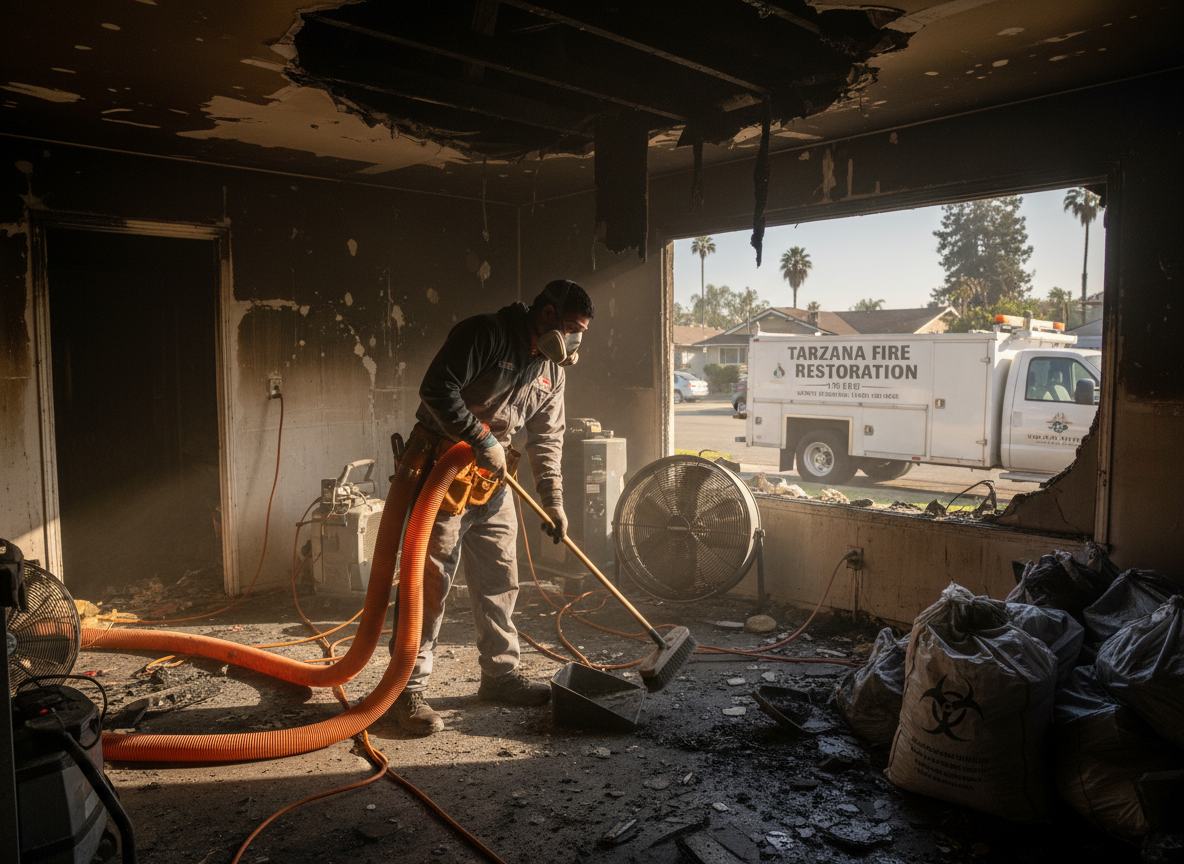
Tarzana homes built in the 1950s and 1960s often feature stucco exteriors and wood framing that trap soot in wall cavities and attic spaces after a fire. Mediterranean climate summers with low humidity and occasional Santa Ana winds push smoke deeper into these structures, requiring technicians to open ceilings and chase odor through insulation rather than surface cleaning alone. Los Angeles building codes demand permits for any structural repairs once fire has compromised load-bearing elements, and crews must coordinate with the Los Angeles Fire Department on clearance before re-entry.
South Tarzana properties near Tarzana Park sit on sloped lots where runoff can carry ash into crawl spaces during the first winter rains, creating secondary mold risks if not addressed immediately. Encino Tarzana Medical Center staff housing and nearby multi-family buildings in Reseda frequently require specialized air scrubbing to meet hospital-adjacent air quality standards. Technicians carry negative-air machines and HEPA filtration sized for these older neighborhoods because standard residential units cannot move enough volume through dense plaster walls.
Emergency response begins with securing the structure against further weather intrusion common in dry summers, followed by inventory of contents that may include vintage furnishings typical in Tarzana Square. Crews document every step for insurance adjusters because Los Angeles County reporting requirements differ from neighboring Ventura County claims. Hidden char behind kitchen cabinets or in HVAC ducts often surfaces only after demolition, changing the scope once the job is underway.
Technician insight
In Tarzana, the thing that catches most people out with Emergency fire damage restoration is how quickly smoke travels through the open beam ceilings common in 1960s ranch homes near South Tarzana and Tarzana Park during dry summer winds, forcing us to open more drywall than homeowners expect before the odor is truly gone.
Attic Soot Migration After Kitchen Fire
A small kitchen fire in a Tarzana Square home sent smoke into the attic through an open chase. We found heavy soot on rafters and insulation that had not been visible from below. Negative-air machines and targeted cleaning removed the residue before winter rains arrived, preventing secondary issues in the older wood structure.
How it works
- 1
Initial Assessment
Technicians arrive within hours, evaluate structural integrity, and document smoke migration patterns through Tarzana homes.
- 2
Safety And Containment
Power and gas are isolated, temporary barriers erected, and air quality monitored before interior work begins.
- 3
Soot And Debris Removal
Specialized vacuums and cleaning agents remove residue from stucco, wood, and insulation without spreading particles.
- 4
Odor Neutralization And Drying
Ozone or hydroxyl equipment treats trapped smoke odor while dehumidifiers address any water used during suppression.
- 5
Restoration And Handover
Repairs restore affected areas to pre-loss condition and final walkthrough confirms clearance for occupancy.
Pricing
Cost depends on fire size, affected square footage, and whether hidden damage appears during demolition.