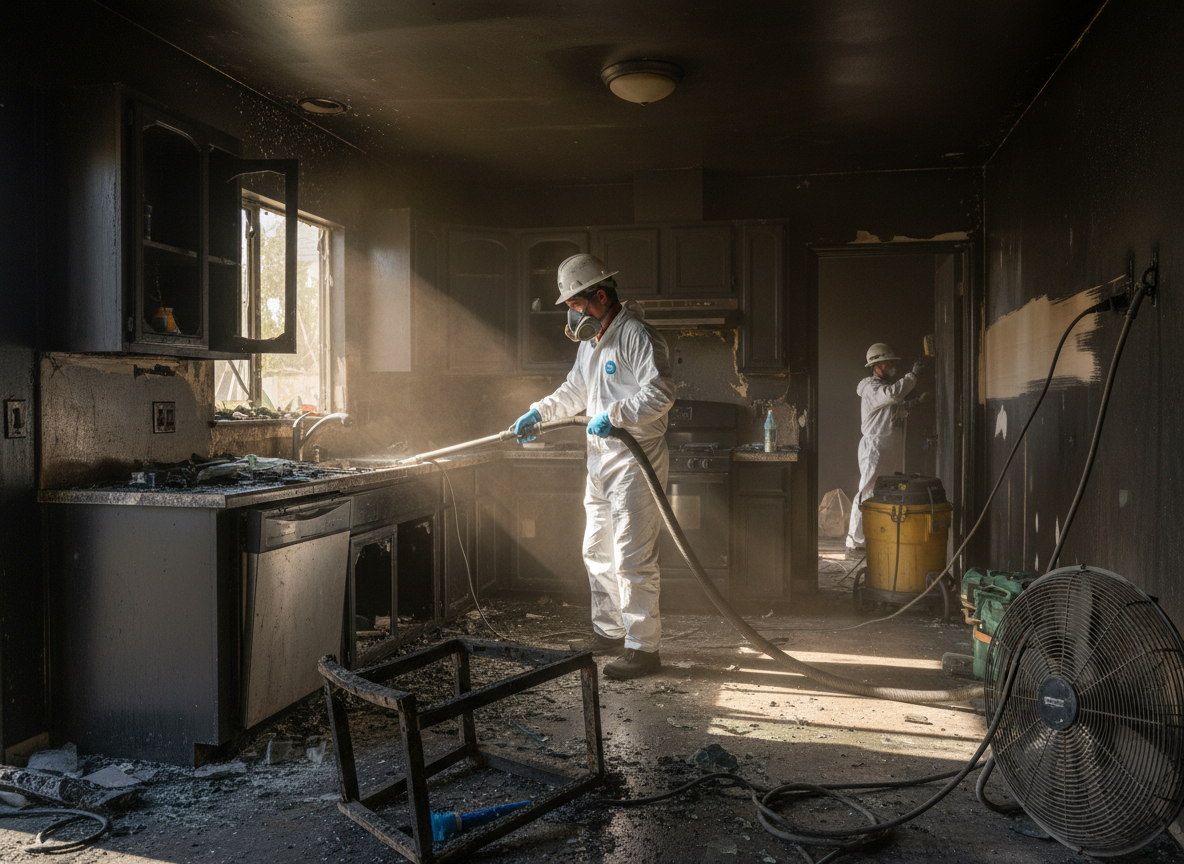
Tarzana's Mediterranean climate brings warm dry summers that turn small kitchen or electrical fires into widespread smoke events, especially in the single-story ranch homes built in the 1950s and 60s around Tarzana Square. Fine soot travels through HVAC ducts and settles in attics and wall cavities, requiring HEPA vacuuming, alkaline cleaning solutions, and often removal of insulation that has absorbed odors. Homes near Tarzana Park face extra challenges from wind-driven embers that push smoke deeper into structures than fires in flatter parts of Reseda.
Los Angeles County building codes require proper disposal of charred materials and verification that no hidden combustion residues remain before drywall repair can begin. Crews working in South Tarzana routinely encounter lead-based paint and older electrical wiring that complicate cleaning; disturbing these layers without containment spreads contaminants into living spaces. Encino Tarzana Medical Center staff housing nearby often needs same-day response because even minor smoke exposure triggers air-quality complaints from residents with respiratory conditions.
After initial suppression, residual heat in stucco exteriors and concrete slabs can re-release trapped odors weeks later if not neutralized with specialized sealers. Technicians test pH levels on every surface because acidic soot from synthetic furnishings etches glass and metal fixtures common in Woodland Hills border homes. Proper sequencing prevents cross-contamination between rooms, a step frequently overlooked when owners attempt DIY cleaning with household products that set the residue permanently.
Coordination with Los Angeles fire investigators is standard before any demolition; moving debris without documentation can affect insurance claims for properties along Reseda Boulevard corridors. Final clearance involves third-party air sampling to confirm particulate levels meet county guidelines before occupants return.
Technician insight
In Tarzana, the thing that catches most people out with fire damage clean up is how the dry summer winds push fine soot deep into the open-beam ceilings and single-wall construction found in South Tarzana homes near Reseda Blvd, so surface wiping alone never removes the odor until those cavities are opened and cleaned.
Smoke in a Tarzana Square attic after neighbor fire
A contained garage fire sent smoke upward through shared attic space into an adjacent 1962 ranch house. Inspection showed heavy soot coating fiberglass insulation and roof sheathing that standard fans had missed. Crews removed the insulation, cleaned all framing with alkaline solution, sealed the wood, and reinstalled new insulation before drywall repairs began.
How it works
- 1
Site Assessment and Documentation
Technicians arrive within hours, map smoke migration paths through the specific floor plan, photograph all affected surfaces, and note construction details typical of Tarzana ranch homes.
- 2
Containment and Air Filtration
Negative air machines and plastic barriers isolate rooms to stop soot from spreading into unaffected areas such as hallways leading to Tarzana Park views.
- 3
Soot and Residue Removal
HEPA vacuums, dry sponging, and pH-adjusted cleaners lift deposits from drywall, cabinets, and ductwork without driving particles deeper into porous materials.
- 4
Odor Neutralization and Clearance
Thermal fogging or ozone treatment addresses embedded smells, followed by air sampling to verify the space meets Los Angeles County re-occupancy standards.
Pricing
Upfront quotes follow on-site inspection; final cost depends on square footage affected, smoke penetration depth, and whether HVAC or attic cleaning is required.