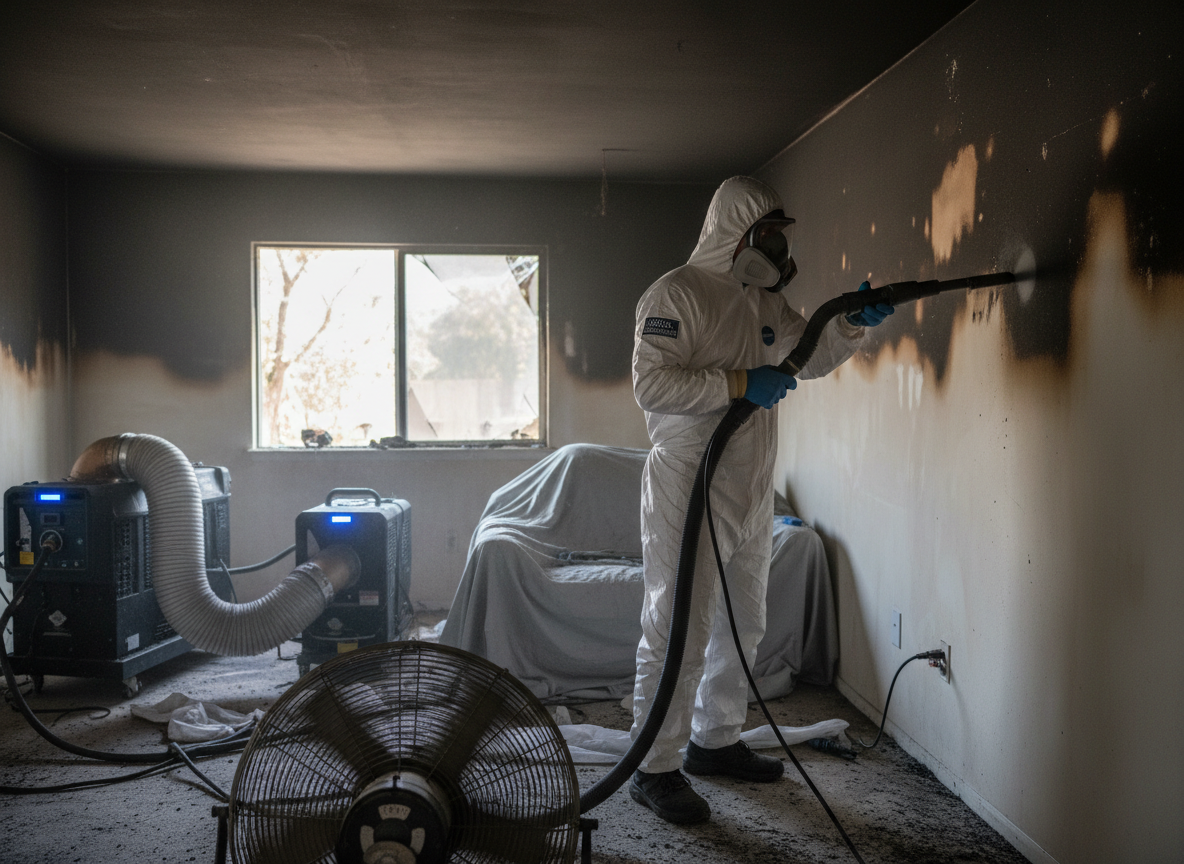
Tarzana homes built before the 1980s often feature plaster walls and unsealed attics that trap smoke odor and particulates long after a fire is out. In the warm dry summers typical of Los Angeles County, low humidity allows fine soot to travel through HVAC systems and settle in South Tarzana and Tarzana Square neighborhoods. Restoration crews must test air pathways and remove affected insulation rather than simply wipe surfaces, or odors return when the first Santa Ana winds hit.
Near Encino Tarzana Medical Center and along Reseda Boulevard, commercial buildings share walls with residential structures, so smoke migrates between units through shared vents and electrical chases. Technicians use negative-air machines and hydroxyl generators sized for the actual square footage to avoid pushing residue into neighboring properties in Woodland Hills or Reseda. Failure to map these connections leaves clients dealing with complaints months later.
Porous materials such as carpet padding, acoustic ceiling tiles, and cabinet interiors absorb smoke at different rates depending on how long the structure sat closed after the fire. In Tarzana’s older stock, crews often discover hidden layers of residue behind baseboards and in crawl spaces that standard ozone treatments miss. Proper removal requires disassembly and disposal rather than sealing, especially when summer heat accelerates off-gassing of treated surfaces.
Technician insight
In Tarzana the thing that catches most people out with smoke damage restoration is how quickly the dry summer air lets soot travel through unsealed stucco and plaster in homes built before 1975. Homeowners often try to clean only visible surfaces and end up with recurring odors once the first heat wave returns.
Smoke Migration Through Shared Vents
A kitchen fire in a South Tarzana duplex sent smoke into the neighboring unit through an old shared duct. Inspection showed residue throughout both attics and HVAC runs. Crews isolated the systems, removed contaminated insulation, and ran continuous filtration until clearance testing passed. Both units returned to occupancy without lingering odors.
How it works
- 1
Initial Assessment
Inspect all affected rooms, HVAC runs, and shared walls to map smoke migration paths specific to Tarzana construction.
- 2
Containment And Air Scrubbing
Set up negative pressure zones and run HEPA filtration to prevent cross-contamination into Encino or Reseda properties.
- 3
Surface And Cavity Cleaning
Remove soot from plaster, wood, and insulation using methods that match the dry climate conditions without spreading residue.
- 4
Odor Neutralization And Final Clearance
Apply targeted treatments and test air quality before returning the property to normal use.
Pricing
Cost depends on square footage affected, depth of smoke penetration into cavities, and whether HVAC cleaning is required.