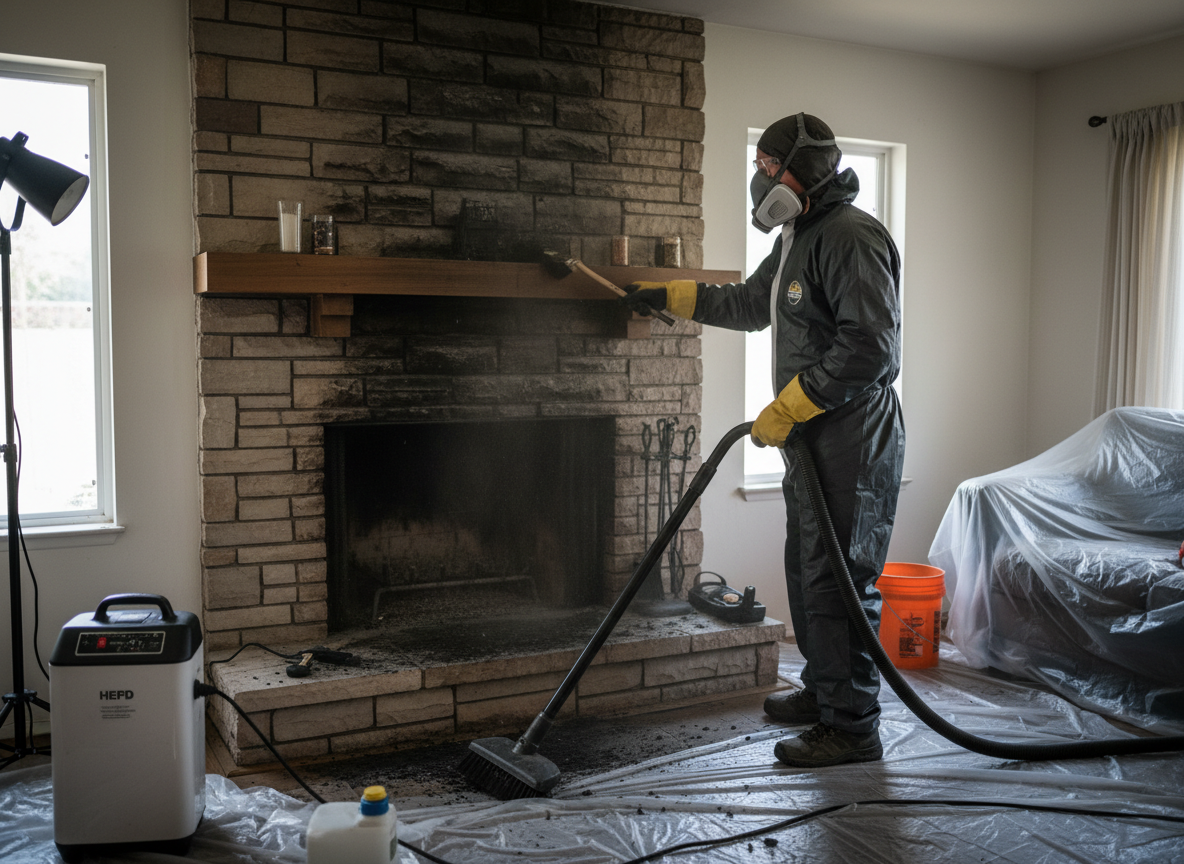
Soot from structure fires in Tarzana clings to porous materials like drywall, insulation, and older hardwood floors common in homes built around Tarzana Square and South Tarzana. The area's Mediterranean climate with warm dry summers keeps soot airborne longer, allowing it to travel through HVAC systems and settle in attics or behind cabinets near landmarks such as Tarzana Park. Technicians must test surfaces for pH levels because alkaline soot from synthetic materials can etch finishes if left untreated, and Los Angeles County air quality rules limit certain solvent use during cleanup.
Edge cases arise in Encino-adjacent properties where smoke migrates through shared walls in multi-unit buildings or older single-family homes with knob-and-tube wiring. Dry summer conditions reduce moisture that might otherwise help contain particles, so crews seal off rooms with plastic sheeting and use HEPA filtration to prevent cross-contamination into unaffected areas like kitchens or bedrooms. Homeowners sometimes attempt DIY vacuuming, which spreads fine particles into carpet fibers and fabric, requiring full replacement instead of cleaning.
Regulatory notes include following Los Angeles County guidelines for disposal of soot-contaminated materials, especially when fires involve nearby commercial sites in Reseda or Woodland Hills. Work often starts with thermal fogging to neutralize odors before surface cleaning, and crews document every step for insurance adjusters who visit properties near the Encino Tarzana Medical Center.
Final inspection uses black lights and moisture meters to confirm no residue remains on textured ceilings or in ductwork, common in Tarzana's mid-century housing stock. Skipping these steps leaves odors that return when temperatures rise again in summer.
Technician insight
In Tarzana, the thing that catches most people out with soot removal is how the dry summer winds push fine particles deep into the textured ceilings and wall cavities of 1950s homes around Tarzana Square; homeowners vacuum once and think it's gone, but the residue stays behind the drywall until humidity shifts.
Soot in South Tarzana Attic
A kitchen fire sent soot upward through shared vents into the attic of a 1960s home near Reseda Blvd. Inspection showed particles embedded in insulation and along rafters. Crews sealed the space, removed contaminated insulation, cleaned rafters with pH-balanced agents, and ran air scrubbers for three days. The homeowner returned to a space free of odor and visible residue.
How it works
- 1
Initial Assessment
Technicians inspect affected rooms in Tarzana homes, identify soot migration paths through HVAC and attics, and note surfaces damaged by dry summer conditions.
- 2
Containment Setup
Plastic barriers and negative air machines isolate work zones to keep particles from spreading to unaffected areas near Tarzana Park or South Tarzana residences.
- 3
Soot Removal
HEPA vacuums, sponges, and approved cleaners lift residue from walls, ceilings, and contents while monitoring pH to avoid surface damage in older Los Angeles County homes.
- 4
Odor Neutralization and Final Check
Thermal fogging addresses lingering smells, followed by black-light inspection and clearance testing before returning the property to normal use.
Pricing
Cost depends on square footage affected, number of rooms, and whether HVAC cleaning or contents restoration is needed.