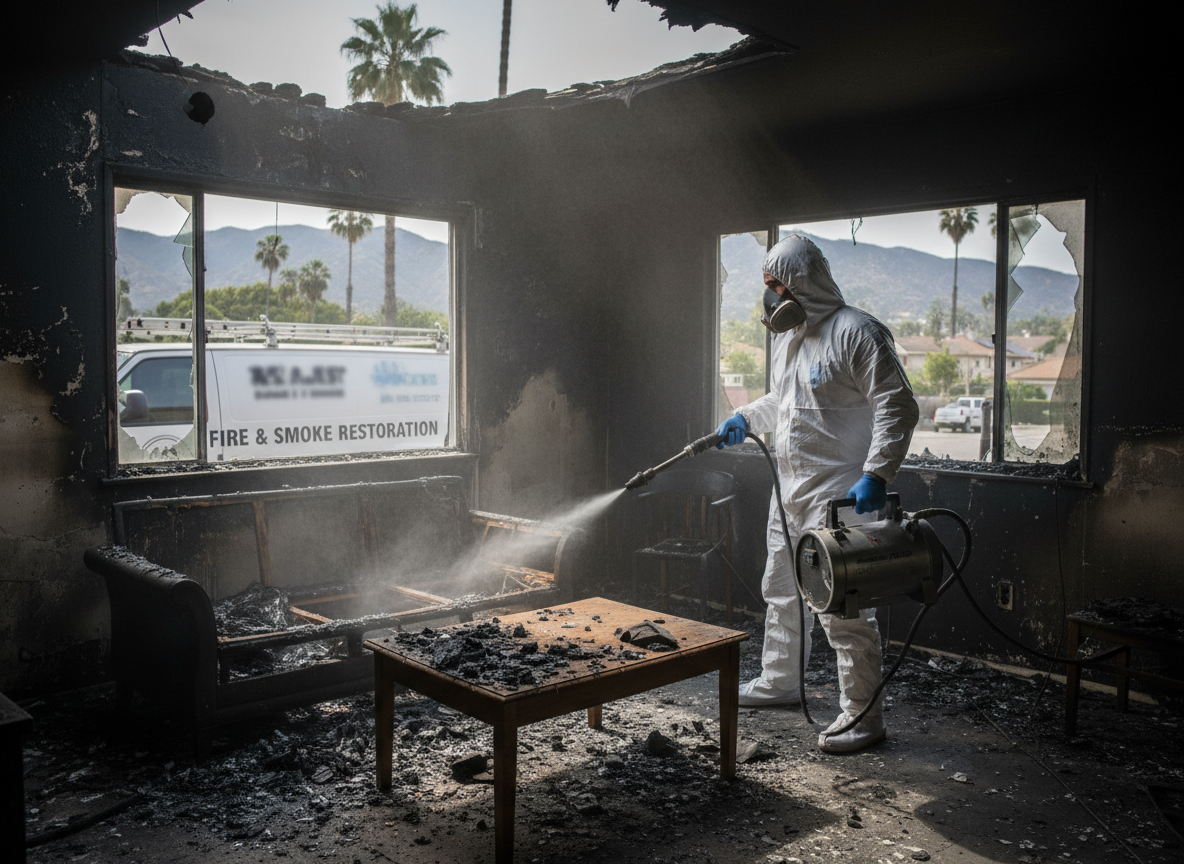
Tarzana homes built in the 1960s and 1970s around Tarzana Square often feature stucco exteriors and open beam ceilings that trap smoke particles deep in porous materials. The Mediterranean climate with warm dry summers accelerates odor migration through HVAC systems and attic insulation before residents notice it. Restoration crews must address both visible soot on surfaces and invisible residues in wall cavities near South Tarzana properties where older single-story ranch homes predominate. Failing to seal and treat these voids allows odors to return when temperatures rise again in late summer.
Work near Encino Tarzana Medical Center and along Reseda Boulevard requires careful coordination with local traffic patterns and noise ordinances that limit heavy equipment hours. Smoke from kitchen or electrical fires travels differently in these layouts than in newer Woodland Hills builds, often settling in crawl spaces where soil moisture from occasional winter rains reactivates odors. Technicians use hydroxyl generators and thermal fogging matched to the specific fuel load of the fire rather than generic ozone treatments that can damage sensitive finishes common in Reseda-adjacent homes.
Residents in Tarzana frequently overlook how dry summer winds push smoke into neighboring Encino and Reseda properties through shared fence lines and attic vents. Proper odor removal demands source identification first, followed by repeated air scrubbing cycles timed to the area's low humidity periods to prevent re-soiling. Crews document every step with photos because insurance adjusters serving Los Angeles County require clear evidence of penetration depth before approving full treatment scopes.
Technician insight
In Tarzana, the thing that catches most people out with Odor removal after fire is how the dry summer heat pulls smoke back out of the older plaster and lathe walls common in South Tarzana homes near Tarzana Park. Homeowners try masking with fans and vinegar but the odor returns the next time the Santa Ana winds kick up because the residue never left the cavities.
Persistent Smoke Odor in South Tarzana Residence
A single-story home near Tarzana Park retained heavy smoke smell weeks after a small electrical fire. Inspection found residue trapped in attic insulation and HVAC ducts shared with the neighboring property. Crews removed affected insulation, treated cavities with thermal fogging, and ran hydroxyl units for three days. Odor cleared completely and the family returned without recurrence during the following warm spell.
How it works
- 1
Initial Assessment
Technicians inspect all affected rooms, attics, and HVAC runs in the Tarzana property to map smoke migration paths.
- 2
Source Removal
Charred materials and loose soot are removed from surfaces and cavities before any odor treatment begins.
- 3
Air and Surface Treatment
Hydroxyl generators and specialized sealants are applied to neutralize residues in porous materials throughout the home.
- 4
Verification and Clearance
Air quality testing confirms odor elimination before final cleaning and return of the property to the owner.
Pricing
Pricing depends on fire size, affected square footage, and materials involved. Upfront quotes provided after on-site assessment.