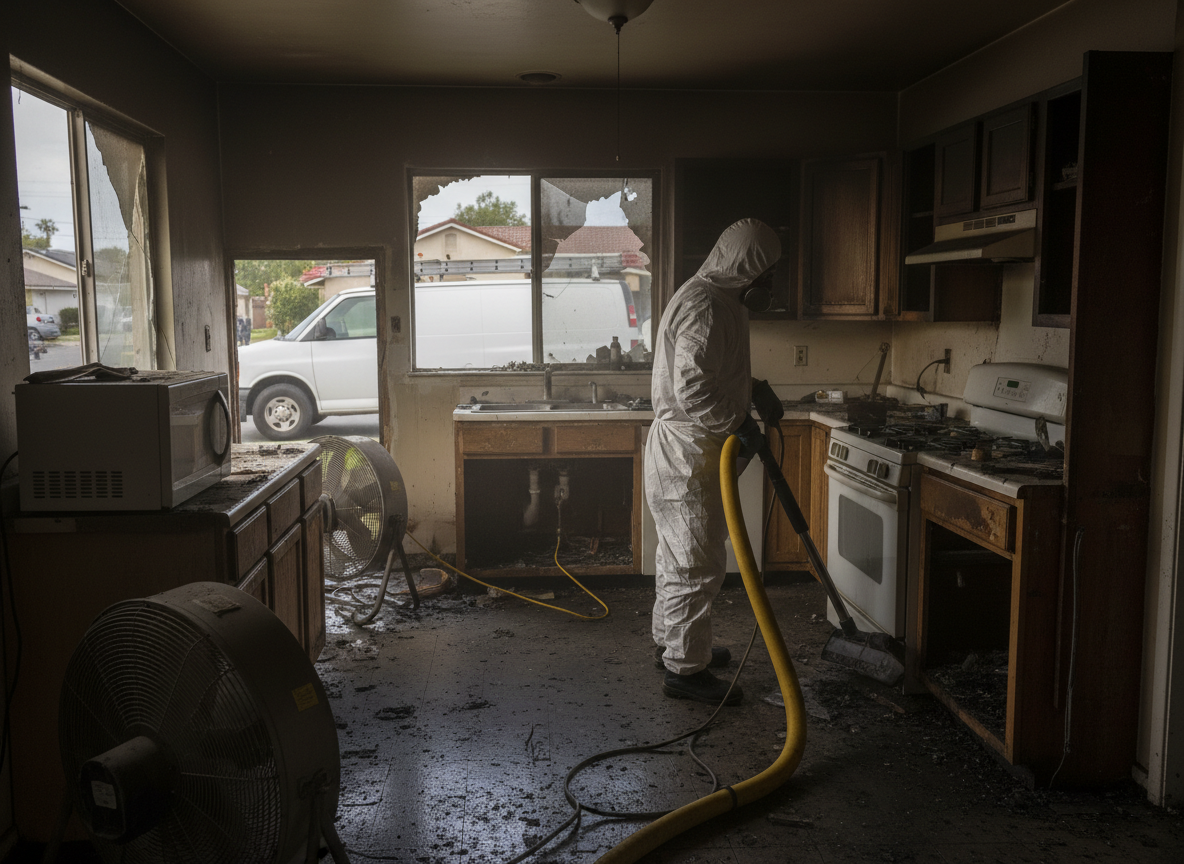
Tarzana homes built before the 1980s often feature wood framing and older electrical systems that allow fire to travel quickly through attics and wall cavities once it starts. A 24 hour fire restoration response must begin with negative air machines and HEPA filtration to capture soot before it settles into the porous drywall and insulation common in South Tarzana properties. Warm dry summers increase ember travel from nearby brush, so crews check exterior siding and roof eaves first when dispatched from 6022 Reseda Blvd.
Los Angeles building codes require updated smoke detector placement and proper fire separation between attached garages and living spaces after any significant burn. Restoration teams document char patterns on lath-and-plaster ceilings typical in Tarzana Square before removal to avoid hidden structural compromise. Crews also test for asbestos in older floor tiles and pipe insulation before demolition begins, a step that changes the timeline when working near Encino Tarzana Medical Center.
Mediterranean climate conditions mean low humidity can keep smoke odors trapped in fabrics and HVAC ducts for weeks if not addressed immediately. Technicians seal off affected zones with plastic sheeting and run air scrubbers continuously while contents are inventoried for separate cleaning or disposal. Properties backing up to Tarzana Park require extra attention to ember intrusion through vents and under eaves during the initial walk-through.
After the fire is out, residual moisture from suppression water can lead to mold in crawl spaces if drying is delayed, especially on lots with poor drainage near Reseda. 24 hour fire restoration includes moisture mapping and targeted dehumidification before reconstruction starts to prevent secondary damage in the warm summer months.
Technician insight
In Tarzana, the thing that catches most people out with 24 hour fire restoration is how dry summer winds push smoke into the narrow crawl spaces under 1950s homes in Tarzana Square, where it stays hidden until reconstruction starts.
Attic fire spread in South Tarzana
A homeowner noticed smoke coming from vents near Tarzana Park. We found the fire had traveled through knob-and-tube wiring in the attic. After documenting char patterns and removing affected insulation, we ran continuous air scrubbing and replaced the damaged section before odors could migrate into living spaces.
How it works
- 1
Emergency Dispatch
Technician leaves the Reseda Blvd location within minutes of the call and arrives on site to secure the property and begin safety assessment.
- 2
Damage Documentation
Photos, moisture readings and soot mapping are recorded room by room before any contents are moved or demolition begins.
- 3
Soot and Smoke Removal
HEPA air scrubbers and specialized cleaning agents remove residues from surfaces, ducts and belongings while preventing cross-contamination.
- 4
Drying and Reconstruction
Water from firefighting is extracted, affected materials are replaced, and the home is returned to pre-loss condition.
Pricing
Upfront quotes provided after on-site inspection; final cost depends on fire size, materials affected and access conditions.