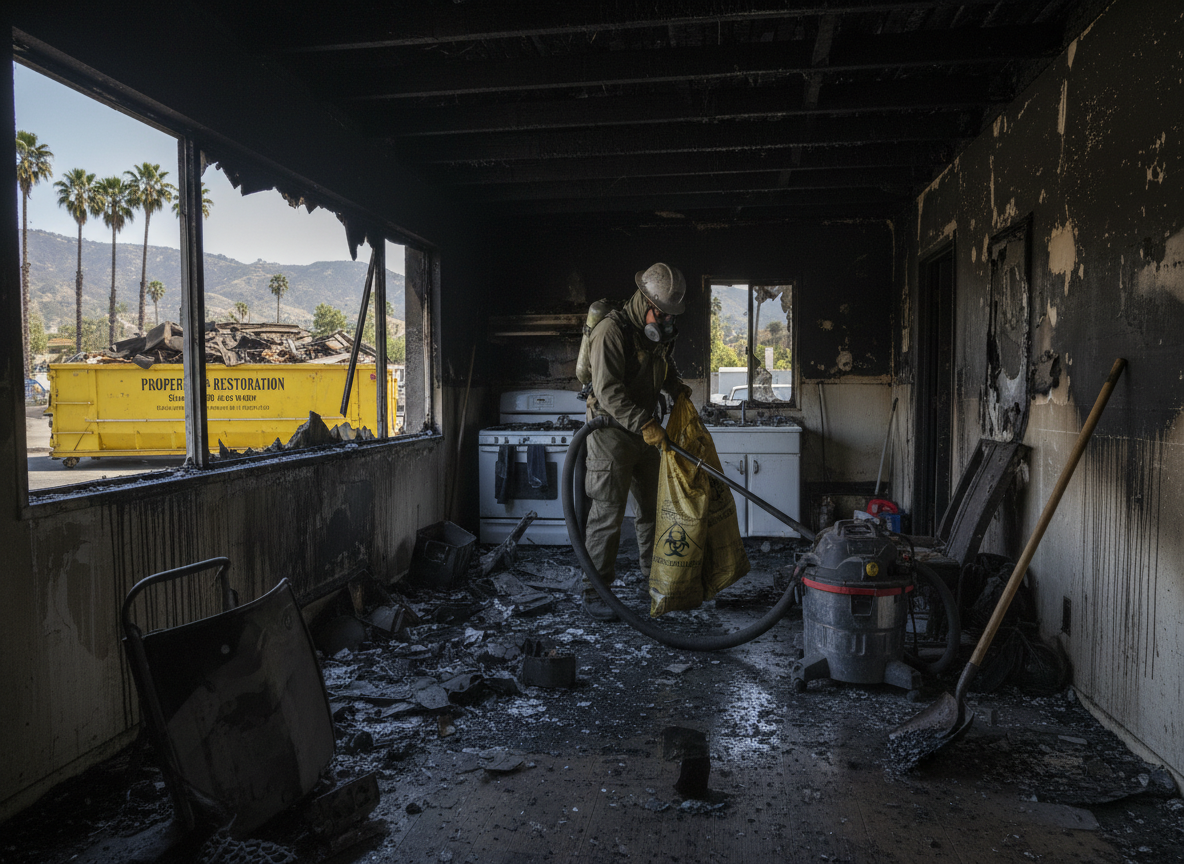
Apartment fire cleanup in Tarzana often involves older multi-story buildings near Tarzana Park where smoke travels through shared HVAC ducts and wall cavities. Mediterranean climate with warm dry summers leaves soot more powdery and airborne, requiring HEPA filtration and negative air machines to prevent cross-contamination into neighboring units. Crews must coordinate with Los Angeles County fire codes on ventilation and disposal while working around occupied apartments in complexes off Reseda Boulevard.
Edge cases include kitchen fires spreading to adjacent units in South Tarzana buildings where lath-and-plaster walls absorb odors differently than modern drywall. Encino Tarzana Medical Center proximity means crews sometimes stage equipment to avoid blocking emergency access routes. Dry summer conditions accelerate corrosion on metal fixtures if acidic soot is not neutralized within days, and porous materials like carpet padding in Woodland Hills-border apartments retain odors unless fully removed.
Regulation notes cover proper handling of charred debris per Los Angeles County waste rules and documentation for insurance adjusters when fires affect common areas. Technicians inspect for hidden ember pockets in attics common to 1970s-era apartments in Tarzana Square, using thermal imaging before sealing surfaces. Failure to address these details leads to recurring smells when humidity rises in fall.
Technician insight
In Tarzana the thing that catches most people out with Apartment fire cleanup is how the dry summer air lets soot travel through every shared wall and vent into units that look untouched. Older buildings around Tarzana Square have plaster that holds odor for months if you skip the neutralization step, and residents in South Tarzana often try DIY wipes that just smear it deeper into textured ceilings.
Kitchen fire in a Tarzana Square complex
Smoke from a second-floor kitchen fire migrated through the HVAC into three neighboring apartments. We found soot coating inside the shared ducts and on bedroom ceilings two floors up. Crews isolated the system, scrubbed all surfaces, and ran air scrubbers for 48 hours before clearance testing allowed residents back in.
How it works
- 1
Initial Assessment
Technicians arrive within hours to document damage in the affected unit and adjacent spaces while checking HVAC paths.
- 2
Containment and Air Scrubbing
Plastic barriers isolate the unit and HEPA air scrubbers run continuously to capture fine soot particles.
- 3
Soot Removal and Cleaning
Specialized sponges and cleaners treat walls, ceilings, and contents; porous items are removed when saturated.
- 4
Odor Neutralization and Final Inspection
Ozone or hydroxyl generators treat remaining odors followed by clearance testing before reoccupancy.
Pricing
Upfront quotes based on square footage affected and number of units involved; no hidden fees after initial inspection.