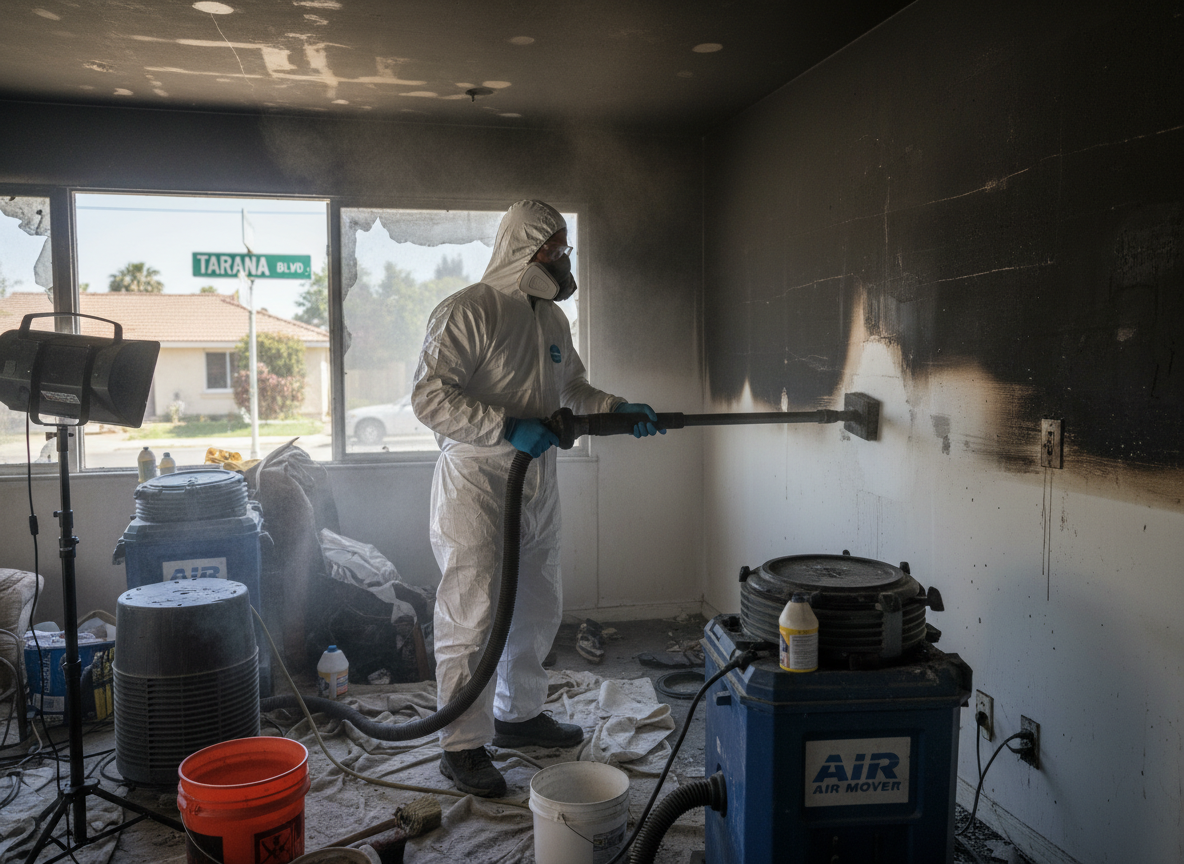
Smoke from structure fires in Tarzana often travels through the dry air of warm summers, settling into older plaster walls and hardwood floors common in South Tarzana homes built before 1970. Porous materials like lathe-and-plaster absorb particulates deeply, requiring removal of affected layers rather than surface cleaning alone to prevent recurring odors months later. Properties near Tarzana Square face additional challenges from shared walls in multi-unit buildings where smoke migrates between units.
In Los Angeles County, building codes require proper ventilation during remediation to avoid pushing contaminants into HVAC systems that serve nearby neighborhoods like Encino and Reseda. Technicians test for hidden residue behind cabinets and in attics, where insulation traps odors especially after dry summer conditions reduce natural moisture that might otherwise dilute particles. Failure to address these spots leads to complaints from homeowners in Woodland Hills who notice smells returning during the next Santa Ana wind event.
Concrete foundations in Tarzana homes can retain smoke odors in crawl spaces if not treated with specialized sealants, a step often skipped when crews focus only on visible surfaces. Local operators know to check soil conditions around properties near Encino Tarzana Medical Center, where runoff patterns during rare rains can carry residues into basements. This demands targeted extraction methods that differ from standard water damage protocols used elsewhere in the county.
Technician insight
In Tarzana, the thing that catches most people out with smoke remediation is how the dry Mediterranean summers let smoke sink into pre-1960s plaster in South Tarzana homes near Tarzana Park. Homeowners often try wiping surfaces themselves, which just drives particles deeper into the lathe before we arrive. That forces extra demolition around Encino Tarzana Medical Center properties where shared walls spread the issue fast.
Hidden Residue in South Tarzana Attic
A fire in a nearby Woodland Hills structure sent smoke into a Tarzana home through the shared roofline. We found heavy particulate trapped in fiberglass insulation above the bedrooms. After removing the affected layers and treating the joists, odors cleared without recurrence during the next dry spell.
How it works
- 1
Initial Assessment
Inspect affected zones in Tarzana homes, testing materials for smoke depth and mapping migration paths through HVAC and wall cavities.
- 2
Containment Setup
Isolate rooms using barriers to prevent cross-contamination between South Tarzana properties and adjacent units in Tarzana Square.
- 3
Residue Removal
Apply specialized cleaning agents to porous surfaces like plaster and wood, followed by HEPA filtration to capture fine particles common after dry summer fires.
- 4
Odor Neutralization
Deploy ozone or hydroxyl treatments in sealed areas, then ventilate per Los Angeles County air quality guidelines before final inspection.
Pricing
Costs depend on square footage impacted, depth of smoke in older Tarzana construction, and whether HVAC systems require full disassembly.