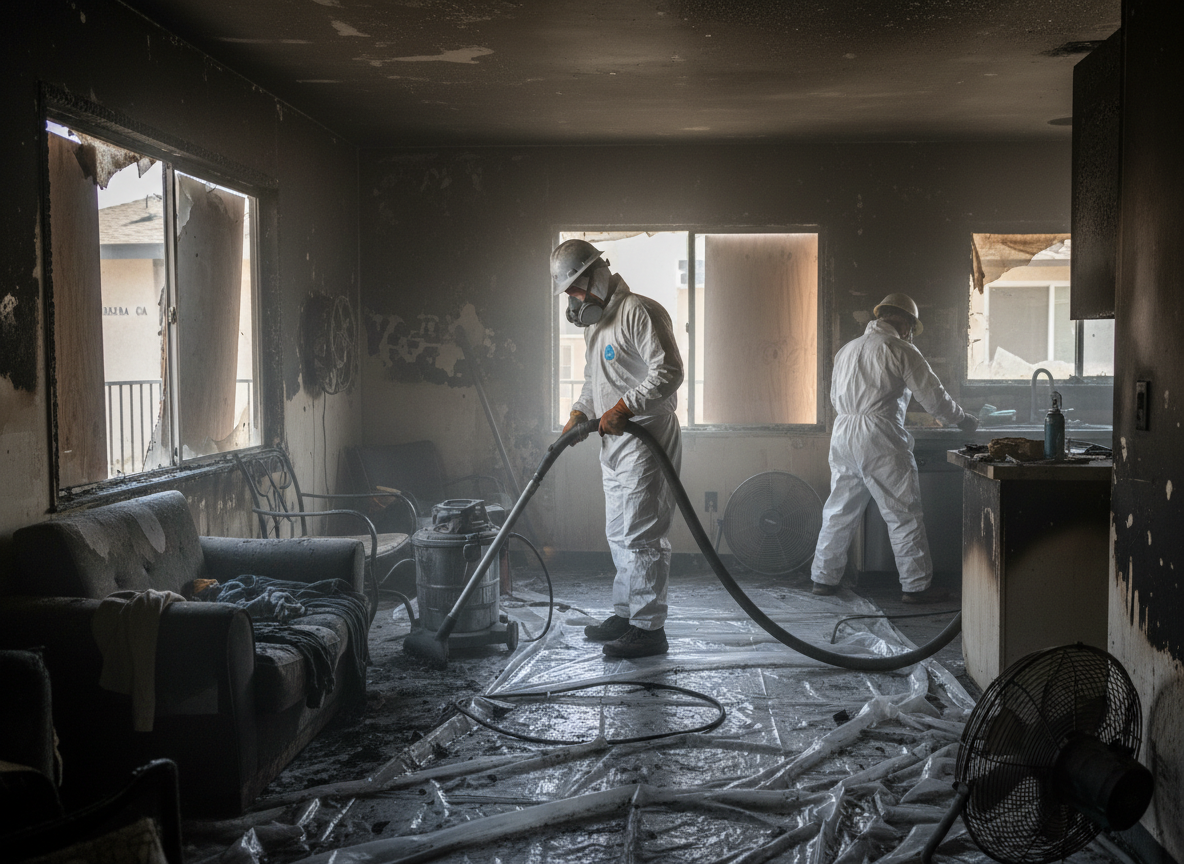
Tarzana's Mediterranean climate with warm dry summers increases fire risk in the older stucco and wood-frame homes common in South Tarzana and around Tarzana Square. Tenant fire damage cleanup must address how low humidity allows smoke to travel through shared walls and HVAC systems in multi-unit buildings, often leaving acidic soot on drywall, insulation and cabinetry that corrodes metal fixtures if not neutralized within days. Crews working near Encino Tarzana Medical Center routinely test for hidden residue in attics where summer winds push particles deep into insulation.
Rental properties in Tarzana frequently feature 1960s-1980s construction with popcorn ceilings and original electrical systems that complicate cleanup after kitchen or electrical fires. Technicians must separate tenant belongings from landlord-owned surfaces while documenting every step for insurance adjusters, because Los Angeles County code requires permits for any structural repairs exceeding cosmetic work. Edge cases include odor trapped in concrete slabs common on flat lots near Reseda Boulevard, which demands specialized sealers rather than simple airing out.
Cleanup teams coordinate with property managers in Woodland Hills and Encino border areas to schedule work around tenant relocation timelines. Dry summer conditions mean exterior soot on stucco can bake into the surface, requiring low-pressure washing before interior work begins. Failure to address subfloor contamination in older homes leads to recurring odors once new flooring is installed, a frequent callback avoided by thermal imaging scans before reconstruction.
Technician insight
In Tarzana, the thing that catches most people out with tenant fire damage cleanup is how the dry summer winds drive smoke into the wall cavities of 1970s stucco homes around Tarzana Square, where it settles on fiberglass insulation that standard vacuuming misses and later releases odor once humidity rises.
Electrical Fire in South Tarzana Duplex
Problem: Smoke from an outlet fire spread through shared walls into the neighboring unit. What we found: Acidic soot coated popcorn ceilings and settled in attic insulation above both rentals. What we did: Contained the space, neutralized surfaces, and cleaned ducts before reconstruction. Outcome: Tenants returned within ten days after clearance testing with no recurring odor.
How it works
- 1
On-Site Assessment
Technicians inspect all affected rooms, test surfaces for pH levels from smoke residue, and document tenant versus landlord items at the Tarzana property.
- 2
Containment and Ventilation
Plastic barriers and negative air machines isolate the fire zone to prevent cross-contamination into unaffected units common in South Tarzana rentals.
- 3
Soot and Residue Removal
HEPA vacuums, chemical sponges and approved cleaners remove acidic soot from walls, ceilings and contents without spreading particles through dry summer air.
- 4
Odor Neutralization and Final Clearance
Ozone or hydroxyl generators treat trapped odors in insulation and subfloors, followed by air quality testing before tenants return.
Pricing
Pricing varies by square footage affected, smoke penetration depth and whether contents require off-site cleaning.