2026-10-17 ·
Preventing Mold After Firefighting Water in Tarzana Properties
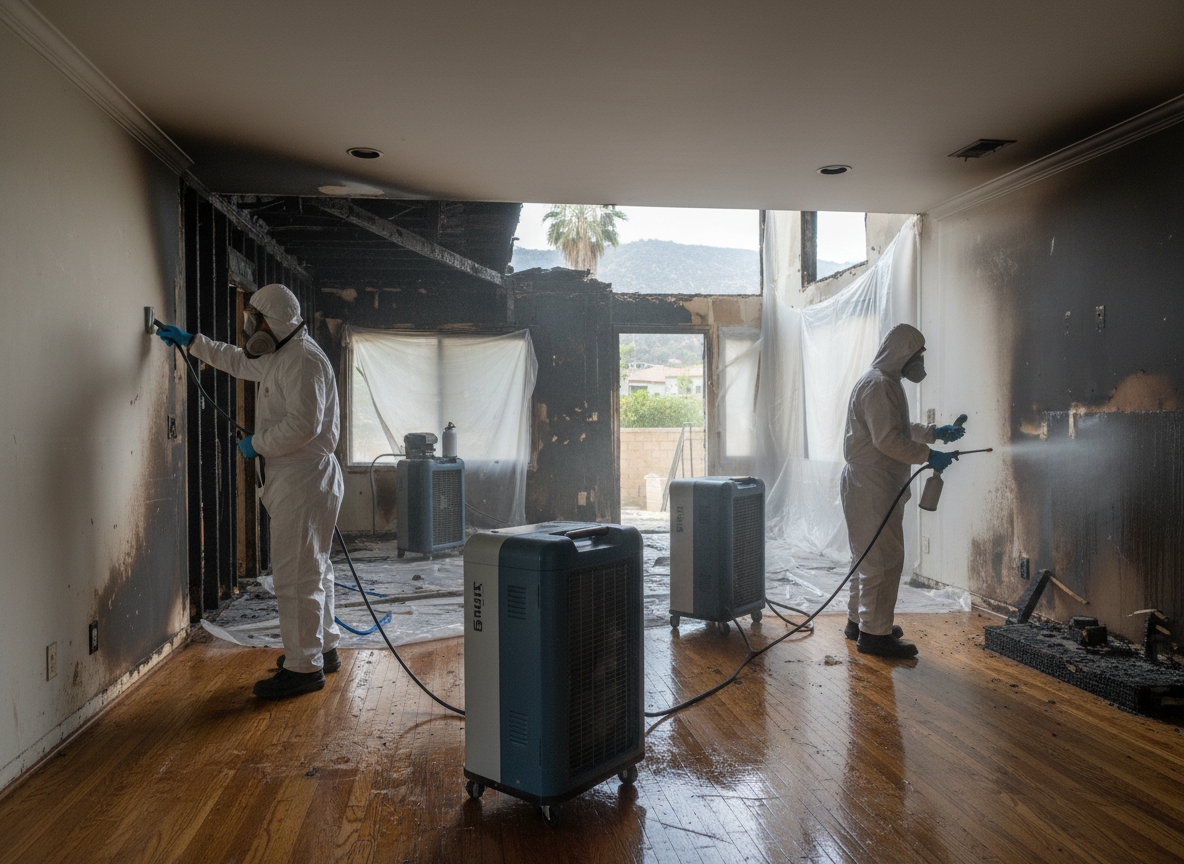
Mold growth after firefighting water begins in 24-48 hours when moisture remains trapped in Tarzana properties. Homes in South Tarzana and near Tarzana Park often feature older wood framing and plaster that absorb water deeply during suppression efforts, especially in Los Angeles County's Mediterranean climate with warm dry summers that mask hidden dampness until spores spread.
Assessing Water Impact in Local Housing Stock
Tarzana properties built decades ago in areas like Tarzana Square commonly have crawl spaces and attics that trap firefighting water against insulation and subfloors. The dry summer air evaporates surface moisture fast but leaves residual humidity that feeds mold behind walls. Residents near Encino Tarzana Medical Center face similar risks because multi-story structures channel water downward through electrical chases. Checking for saturation requires lifting baseboards and using moisture meters on drywall in South Tarzana bungalows where original lath-and-plaster holds water longer than modern materials. Early assessment prevents hidden colonies from forming under flooring in Woodland Hills-adjacent homes that share similar construction.
Rapid Extraction and Initial Drying Steps
Remove standing water within the first few hours using pumps and wet vacuums before it migrates into porous surfaces common in Reseda-bordering neighborhoods. Open windows during cooler evening hours to leverage natural airflow while running air movers aimed at affected zones. Focus on under-sink cabinets and behind appliances where Tarzana kitchens often collect runoff from upstairs bathrooms. Place dehumidifiers set to 45-50 percent relative humidity in enclosed spaces to pull moisture from framing members that standard fans cannot reach. Document every affected room with photos for insurance purposes while working methodically through Encino-adjacent properties.
Monitoring and Long-Term Prevention Measures
Continue checking moisture levels daily for at least five days after initial drying because Los Angeles summers can create temperature swings that re-condense vapor inside wall cavities. Install temporary ventilation in attics of South Tarzana homes to exhaust humid air before it settles on insulation. Replace saturated drywall sections promptly rather than attempting to dry them fully in place, especially around Tarzana Park residences where older electrical wiring increases secondary risks. Schedule follow-up inspections two weeks later to confirm no recurring humidity in crawl spaces typical of the area's housing stock. Fire and flood restoration teams familiar with these patterns can verify complete dryness using thermal imaging.
When Professional Intervention Becomes Necessary
Persistent musty odors or visible spotting after seven days signal the need for advanced remediation beyond homeowner tools. Properties in Reseda and Woodland Hills often require HEPA air scrubbers to capture airborne spores stirred up during demolition. Navigating insurance claims after fire damage in Los Angeles County outlines documentation steps that help Tarzana owners recover costs for hidden water damage. Call 24/7 service from 6022 Reseda Blvd when ceilings show sagging or when multiple rooms are involved, as these conditions exceed typical DIY drying capacity in the region's older stock.